
Setting up a home studio is hard. Picking a microphone is confusing because every brand claims to sound the best. Most of those claims just confuse buyers who want clear, clean audio.
Many people buy premium gear without treating their room, or they pick a microphone that does not match their voice. The real differences only show up when thousands of creators start using them and sharing what actually happens.
We went through the top options and read thousands of real buyer reviews. This guide helps you pick the right microphone for your exact setup, so you can stop guessing and start recording.
Quick Comparison
| # | Product | Rating | Reviews | Best For | Action |
|---|---|---|---|---|---|
| #1 | RØDE NT1 Signature | 4.7 | 1,954 | Overall Value | View on Amazon |
| #2 | Shure SM7B Dynamic | 4.7 | 12,779 | Podcasting | View on Amazon |
| #3 | Mackie EM-91C | 4.6 | 1,166 | Budget Pick | View on Amazon |
| #4 | RØDE NT1 5th Gen | 4.6 | 1,759 | Flexibility | View on Amazon |
#1 Best Overall Value — RØDE NT1 Signature

This microphone suits home studio owners who want a clean, classic vocal sound. It works well for singing, voiceovers, and acoustic instruments.
The self-noise sits at just four decibels. This means the microphone does not add any background hiss to your recordings. You get a crystal clear audio file that is easy to mix later.
Buyers consistently mention how well this microphone rejects background room noise. Many users love the included shock mount and pop filter. A few note that setting up the shock mount takes a little practice the first time.
This model shines when you record vocals in a quiet room. The cardioid pattern focuses directly on your mouth and ignores sounds coming from behind the microphone.
Honestly, the included accessories make this a massive win. You get a premium shock mount and a long XLR cable right in the box. I would suggest this to anyone starting a serious home studio, though you will need an audio interface to power it.
Compared to the Mackie EM-91C, the RØDE captures a brighter, more detailed high end.
✅ Pros
- Captures natural and warm vocals
- Blocks out unwanted room noise
- Includes a high-quality shock mount
- Feels solid and well-built
❌ Cons
- Requires an external audio interface for phantom power
- Shock mount assembly takes some practice
💬 What Customers Say
Most buyers agree that this microphone sounds incredibly clean and professional. People who record in normal bedrooms say it does a great job of ignoring computer fan noise. A few users mention that the shock mount feels a bit stiff at first, but almost everyone loves the overall build quality.
#2 Best for Podcasting — Shure SM7B Dynamic
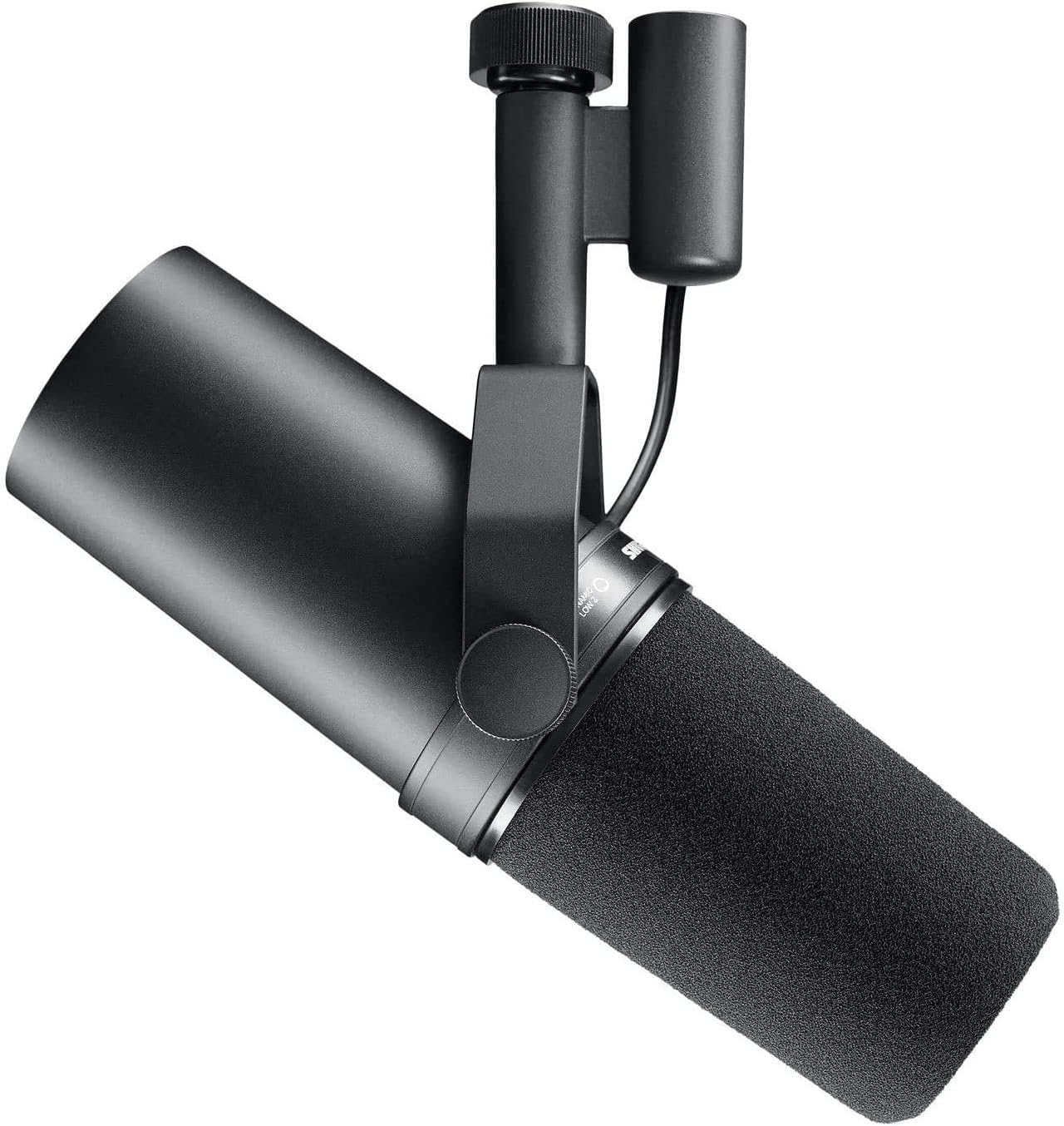
This microphone fits podcasters, streamers, and vocalists who record in untreated rooms. While it is a dynamic microphone rather than a condenser, it remains a top choice for studio vocals.
The built-in air suspension shock isolation stands out the most. It stops desk bumps and keyboard clicks from ruining your audio. You get a smooth, broadcast-ready voice every time you speak.
Customers rave about the warm, rich tone this microphone gives their voice. Many buyers point out how perfectly it hides bad room acoustics. However, several users warn that you absolutely need a strong preamp to get enough volume.
The SM7B works best when you speak right up close to it. This close-miking technique gives you that deep, classic radio host sound.
I think this is the safest choice if your room echoes a lot. Condenser microphones pick up everything, but this dynamic microphone only hears what is right in front of it. I would not pick this if you have a weak audio interface, because it requires a lot of gain to work properly.
✅ Pros
- Hides room echo and background noise easily
- Gives voices a deep and rich tone
- Blocks out desk vibrations
- Built tough out of metal
❌ Cons
- Requires a very strong preamp to reach good volume levels
- Lacks a USB connection for simple setups
💬 What Customers Say
Across thousands of reviews, the thing people mention most is the rich, warm vocal tone. Buyers love how it ignores barking dogs and street noise outside. The most common warning from users is that you must have a strong audio interface to boost the quiet signal.
#3 Best Budget Pick — Mackie EM-91C Condenser

This microphone works well for beginners, gamers, and teachers who need better audio for videos. It offers a simple entry into large-diaphragm condenser microphones.
The solid metal construction gives it a premium feel. It handles daily use and accidental bumps easily. You do not have to worry about it breaking if you move it around your desk often.
Buyers say it provides a huge upgrade over basic USB or headset microphones. Many users like how it handles harsh speech sounds. Some reviewers mention that the low-end frequencies can sound muddy if you do not use an equalizer.
It does a great job for long-form spoken word, like reading an audiobook or recording a long video.
Honestly, the rolled-off high frequencies make this microphone unique. It avoids the harsh, tinny sound that ruins many entry-level condenser microphones. I would recommend this if you have a sharp voice and want to smooth it out. I would skip this if you want to record bright acoustic guitars.
✅ Pros
- Smooths out harsh speech sounds
- Feels heavy and durable
- Comes with a desk stand and cable
- Easy to set up
❌ Cons
- Bass frequencies can sound muddy without editing
- Picks up some room echo if you sit too far away
💬 What Customers Say
Parents and teachers who switched to this say it makes their voice sound much clearer on calls. Many buyers appreciate the heavy metal build. A few advanced users note that you need to lower the bass settings on your computer to get the clearest sound possible.
#4 Best for Flexibility — RØDE NT1 5th Gen

This microphone suits modern creators who want to record on both laptops and traditional studio gear. It bridges the gap between simple home setups and professional studios.
The dual connection design changes everything. You can plug it directly into your computer using USB, or use an XLR cable to connect it to a mixer. This lets you upgrade your studio gear later without changing your microphone.
Customers love how clean and detailed their vocals sound right out of the box. Many buyers praise the digital recording over USB, which stops loud noises from distorting. A few users warn that you must speak into the side with the gold dot, or it sounds distant.
This microphone shines when you travel. You can plug it into a laptop with a USB cable in a hotel room and still get studio-grade audio.
The digital float feature over USB is what stands out most to me. It means you can shout or whisper, and the audio file will not clip or ruin. I highly suggest this to solo creators who do not want to worry about setting perfect volume levels before hitting record.
✅ Pros
- Connects via USB or XLR cables
- Prevents audio distortion during loud moments
- Captures high-resolution digital audio
- Includes a premium shock mount
❌ Cons
- Only records properly from one specific side
- Internal system effects require some manual tweaking
💬 What Customers Say
Gamers and musicians who use this daily report that the dual USB and XLR options make life incredibly easy. Buyers love that they can record loud vocals without clipping the audio. Some users point out that the microphone is quite heavy, so you need a strong boom arm to hold it.
Frequently Asked Questions
Do I need phantom power for a condenser microphone?
Does a premium microphone guarantee better vocals?
What does a shock mount do?
What is the difference between cardioid and other patterns?
Conclusion
The RØDE NT1 Signature Series stands out as the best overall choice. It delivers incredibly clean audio, comes with great accessories, and handles high volume easily. It provides everything a home studio needs to capture professional vocals.
If you record in a noisy room and want a classic broadcast voice, the Shure SM7B remains a fantastic alternative. Take your time, treat your room, and pick the microphone that best fits your daily workflow.